
Does Your GL Policy Cover a Consulting or Advisory Role? (Probably Not)
Think GL covers your advice on a job? It doesn't. Learn why consulting or advisory work leaves California contractors exposed — and what actually protects yoution.
Scott Henricks
7/8/20264 min read

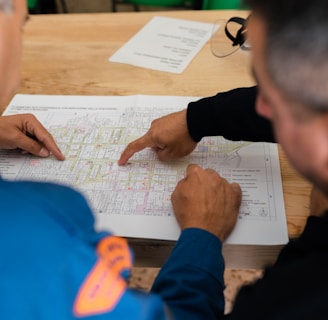
You're a general contractor. A client asks you to weigh in on a project before you've been hired to build anything — review some plans, advise on sequencing, flag a potential structural issue, recommend a subcontractor's approach. You've done this a hundred times. It feels like part of the job.
It isn't covered like part of the job.
The Line You Don't See Until It's Crossed
General Liability and Workers' Compensation are built around physical work: bodily injury, property damage, workplace injuries tied to construction activity. The moment you shift from doing the work to advising on the work, you've stepped into professional services — and that's a different exposure entirely.
Most contractors never notice the line because nothing changes on their end. Same client, same project, same invoice format. But a plaintiff's attorney sees it clearly, because it's the easiest way to keep your GL carrier from responding.
What This Looks Like in Practice
A GC is asked to consult on a project — reviewing existing plans, offering an opinion on approach, flagging concerns before construction starts. No hands-on building involved. Later, something on the project goes wrong, and the client's attorney frames the complaint around the advice given, not any physical work performed.
At that point, GL and WC have nothing to respond to. There's no bodily injury, no property damage from an occurrence — just an allegation that professional judgment was negligent. That's a Professional Liability claim, and without that coverage, you're paying defense costs and any settlement out of pocket.
This isn't rare. It's one of the more common ways contractors get caught exposed, precisely because the work feels like construction even when the claim is framed as something else.
Why the Complaint, Not the Facts, Decides Your Coverage
Insurance carriers determine whether they owe you a defense by comparing the allegations in the lawsuit to your policy language — not by investigating what actually happened first. This is sometimes called the "four corners" rule: if the complaint, on its face, alleges something outside your GL policy's scope, the carrier has no duty to defend, regardless of how the underlying facts might actually play out at trial.
That means a plaintiff's attorney has every incentive to frame a dispute around your advice or judgment rather than your physical work, even if the two are hard to separate in reality. A GC who spent a day advising on a project and a week building it can end up facing a lawsuit that only mentions the advising — because that's the framing least likely to trigger your GL carrier's defense obligation.
You don't get a vote in how the complaint is worded. That's what makes this exposure harder to manage through good work alone; it's not about whether you did the job well, it's about how a claim gets pled.
Why "I'm Just Being Helpful" Is the Risk
The scenarios that create this exposure are usually the ones that feel most harmless:
- Reviewing a subcontractor's plan before work starts
- Recommending a specific approach or material based on your experience
- Advising a client informally, outside a signed scope of work
- Stepping in as a project advisor between GC roles
None of these involve a hammer, a truck, or a jobsite injury. All of them can trigger a claim your GL policy was never built to handle.
What Professional Liability Actually Covers Here
Contractors Professional Liability (also called E&O) responds to claims involving negligent acts, errors, or omissions in the performance of professional services — including advisory and consulting work, project supervision, and judgment calls that don't fit neatly into "construction."
It's not a replacement for GL. It's the piece that picks up where GL's definition of "occurrence" stops.
Many claims against contractors today have mixed elements — some physical work, some advisory judgment, often blended in the same project and even the same complaint. When that happens, having both GL and Professional Liability in place means the two policies can work together, each responding to the piece of the claim it was built for, rather than leaving a single gap that neither policy covers.
What This Means for Your Contracts, Too
Coverage aside, it's worth looking at how your scope of work is documented. If your contracts and proposals blur the line between "construction services" and "consulting" — for example, by including informal plan review or project advice as part of a broader construction agreement without separating it out — that ambiguity can work against you if a claim ever gets filed. Clear scope language doesn't replace the right coverage, but it does make the coverage conversation easier when a claim comes in.The Takeaway
If any part of your work involves giving advice, reviewing someone else's plans, or consulting outside a hands-on building role — even occasionally — General Liability alone leaves a real gap. It's worth a conversation with your broker about whether Professional Liability should be part of your program, not an afterthought.
Next steps:
- Identify whether any part of your current scope of work includes advisory or consulting activity
- Ask your broker whether your current policy addresses professional services exposure
- Get clear on where "construction" ends and "professional services" begins in your contracts
Want a no-cost review of your current coverage? [Contact us].
---
This article is for educational purposes only and does not amend or replace your actual policy wording. Coverage depends on specific policy terms, endorsements, and applicable state law.
Get in touch with our experts today
23052 Alicia pkwy, suite H378, Mission Viejo, CA 92692
Call:
(949) 305-5577
CA Lic# 0F56527
FL Lic# L129585
© 2026. All rights reserved.
11582 SW Village Pkwy, #545, Port St Lucie, Fl 34987
Call: (772) 254-9221