Additional Insured vs. Certificate Holder: Why Your COI Isn't Full Protection
Certificate holder and additional insured aren't the same thing. Learn why your COI doesn't guarantee coverage — and what to check before you rely on it
CERTIFICATE HOLDER VS. ADDITIONAL INSURED
Scott Henricks
7/2/20263 min read

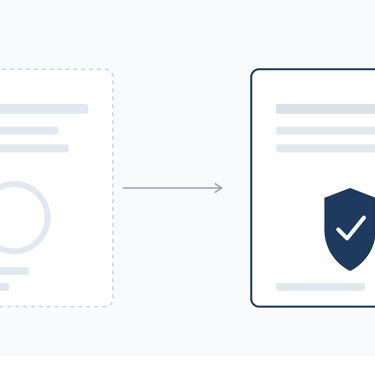
A certificate of insurance is not a policy. It's not even a summary of one. It's a snapshot, unverified, that can be outdated the moment it's issued. If you're a general contractor relying on a COI as proof that your sub's coverage will protect you, you're one endorsement short of a very expensive lesson.
Certificate Holder vs. Additional Insured — Not the Same Thing
Being listed as the certificate holder means you receive a copy of the certificate. That's it. It doesn't grant you any rights under the policy, doesn't extend coverage to you, and doesn't obligate the insurer to defend or indemnify you for anything.
Being named as an additional insured (AI) means the policy itself has been endorsed to extend coverage to you for liability arising out of the named insured's work. That's a contractual right, not a courtesy copy.
A COI showing your name in the "Certificate Holder" box tells you nothing about whether you're actually an additional insured. The AI status has to be confirmed through the endorsement itself — not the certificate.
The Endorsement Form Is Where the Real Exposure Lives
Not all additional insured endorsements are equal. Two forms come up constantly in construction risk transfer, and the difference between them determines whether you're protected after the job is finished:
CG 20 10 — Additional Insured – Owners, Lessees or Contractors. Depending on the edition date, this can cover ongoing operations only, meaning coverage ends when the sub's work on the project is complete.
CG 20 37 — Additional Insured – Owners, Lessees or Contractors – Completed Operations. This extends AI status to claims arising after the work is finished — which is exactly when most construction defect and injury claims actually surface, often years later.
A GC holding only a CG 20 10 with no completed operations endorsement is uninsured for the claim that shows up 18 months after project closeout, even if the sub's policy was fully active during construction. That's the gap that ends up in litigation, and it's invisible on a standard COI.
What the Certificate Doesn't Tell You
A COI is a summary generated by the sub's agent, not a certified excerpt of the actual policy. It can be wrong, outdated, or issued in good faith before an endorsement was actually added to the policy. None of the following show up on a standard ACORD 25 certificate:
Whether the AI endorsement includes completed operations
Whether the endorsement is primary and noncontributory
Whether a waiver of subrogation was actually issued
Policy exclusions that could gut the coverage entirely
Whether the certificate was issued before or after the endorsement was bound
What Actually Protects You
Request the endorsement itself, not just the certificate. If a sub's agent can't produce it, that's your answer.
Confirm primary and noncontributory language. Without it, your own GL policy may end up paying first — defeating the entire purpose of risk transfer.
Verify completed operations coverage on every subcontractor doing structural, roofing, plumbing, or electrical work — the trades where claims surface long after the job is done.
Track expiration, not just issuance. A COI is a point-in-time document. Build renewal tracking into your subcontractor management process, not just your initial onboarding.
The Bottom Line
Risk transfer only works if the paper behind it actually says what you think it says. A certificate tells you a policy exists. It doesn't tell you that policy protects you. If your subcontractor management process stops at collecting COIs, you don't have risk transfer — you have a filing cabinet.
Unique Risk Management and Insurance Services works with contractors and GCs to build subcontractor risk transfer programs that hold up when a claim actually hits. Contact us to review your current COI collection process.
Get in touch with our experts today
23052 Alicia pkwy, suite H378, Mission Viejo, CA 92692
Call:
(949) 305-5577
CA Lic# 0F56527
FL Lic# L129585
© 2026. All rights reserved.
11582 SW Village Pkwy, #545, Port St Lucie, Fl 34987
Call: (772) 254-9221